
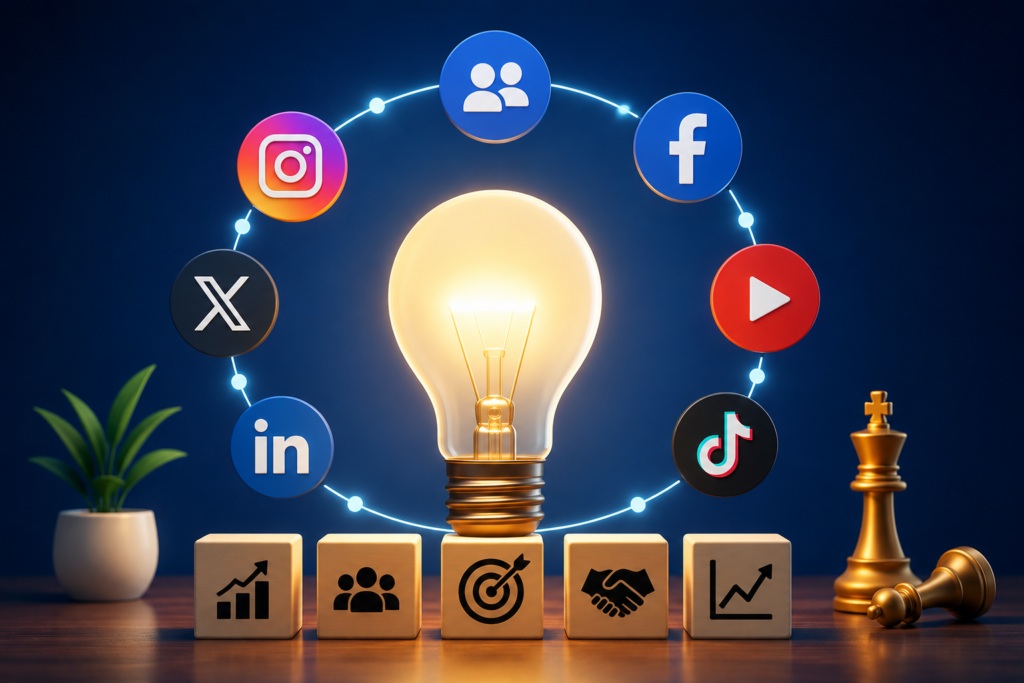
Imagine walking into a massive, bustling public square. Millions of people are gathering in different corners. They are chatting, sharing stories, showing off their favourite products, and asking for recommendations. Some people are gathered around a food stall. Others are watching a street performer. In the digital world, this massive public square is social media. Platforms like Facebook, Instagram, TikTok, LinkedIn, and X (formerly Twitter) are the modern places where humanity hangs out. If you run a business, you cannot afford to stand outside this square. You need to be right in the middle of it, talking to people and sharing what you do. That is exactly what social media marketing is all about.
But how does it work? How can a small business or a new creator use these apps to grow, make sales, and build a loyal community?
This comprehensive guide will break down everything you need to know in plain, simple English. No complex tech jargon. No confusing corporate speak. Just a straightforward, human guide to mastering social media marketing from scratch.
Social Media Marketing Meaning and Definition

Let us start with a simple definition.
Social media marketing (SMM) is the practice of creating and sharing content on social media networks to achieve your marketing and branding goals.
It is not just about posting a picture of your product today and hoping someone buys it tomorrow. It is a deliberate strategy. You use text, images, videos, and live audio to speak directly to your target audience.
At its core, social media marketing is about connection.
Years ago, traditional marketing was a one-way street. A business bought a billboard or a TV commercial. They shouted their message at you, and you just had to listen. You could not talk back to the billboard.
Social media changed the entire game. Now, marketing is a two-way conversation. When you post something, your customers can comment, ask questions, share your post with their friends, or send you a direct message. It makes businesses human.
When done right, social media marketing does three major things:
- It drives website traffic so people can buy your products or services.
- It builds brand awareness so people actually know who you are.
- It creates a community of loyal fans who love your brand and trust your voice.
Core Benefits of Social Media Marketing
- It is incredibly cost-effective. Setting up a business profile on Instagram, Facebook, TikTok, or LinkedIn is 100% free. You do not need a million-dollar budget to start posting. You can reach thousands of people organically just by creating helpful or entertaining content.
- It builds deep customer trust. People buy from brands they know, like, and trust. When you post behind-the-scenes videos, answer customer questions live, and show the faces of the people running your business, you build massive trust.
- It provides instant market feedback. Want to know if your customers prefer a blue product or a red product? You do not need to hire an expensive research firm. Just post a poll on your Instagram Stories. Your audience will tell you what they want in real-time.
- It levels the playing field. A small, local coffee shop can create a viral TikTok video that gets millions of views. On social media, creativity and authenticity matter far more than having a massive corporate budget.
- It boosts your search engine rankings. Google loves active brands. When people talk about your business on social media and share links to your website, it signals to search engines that your business is legitimate and popular. This can help you rank higher on Google search results.
The 5 Core Pillars of Social Media Marketing
To build a social media strategy that actually brings in revenue, you need to understand the five core pillars of the industry. Think of these as the foundation of your digital house.
1. Strategy
2. Planning & Publishing
3. Listening & Engagement
4. Analytics
5. Advertising
1. Strategy
Before you open an app and start posting random photos, you must sit down and make a plan. Random posting leads to random results. Ask yourself these critical questions:
- What are my goals? Are you trying to get website clicks, sales, or just want people to recognize your logo?
- Who is my target audience? Are you selling to 20-year-old college students or 50-year-old corporate executives? This dictates which platforms you use and how you speak.
- What kind of content will I share? Will you focus on educational blog links, funny short videos, or beautiful product photos?
2. Planning and Publishing
Consistency is the secret sauce of social media. You cannot post once every three weeks and expect to see growth. The algorithms love accounts that post regularly.
- Planning means mapping out your content calendar a week or a month in advance.
- Publishing means actually putting the content live. To make your life easier, you can use free or affordable scheduling tools (like Buffer, Hootsuite, or Later) to schedule your posts ahead of time so they go out automatically.
3. Listening and Engagement
Once your content is out in the world, people will start interacting with it. They will leave comments, tag you in their own posts, or send you private messages.
- Listening means monitoring what people are saying about your brand, your competitors, and your industry.
- Engagement means replying to those people. If someone leaves a nice comment on your post, say thank you! If someone complains about a bad experience, address it kindly and professionally. Treat your comment section like a customer service desk.
4. Analytics and Reporting
How do you know if your social media marketing is actually working? You look at the data. Every major social media platform gives you a free “Insights” or “Analytics” dashboard. You need to log in weekly or monthly to check key metrics:
- Reach: How many unique people saw your post?
- Engagement: How many people liked, commented, saved, or shared it?
- Clicks: How many people clicked the link in your bio to visit your store?
If you notice that your video posts get 10 times more engagement than your photo posts, the data is telling you to make more videos!
5. Advertising
While organic (free) social media marketing is amazing, it takes time to build. If you want to speed up your growth, you can dive into paid social media advertising. Platforms like Facebook and Instagram allow you to pay to show your posts to highly specific groups of people. You can target users by their exact age, location, hobbies, job titles, and buying habits. Even a small budget of $5 a day can get your business in front of thousands of new buyers.
Main Types of Social Media Marketing
Social media is not a single, giant machine. It is a collection of completely different ecosystems. To win, you must understand the different styles of marketing available to you.

Organic Social Media vs Paid Social Media Advertising
The biggest division in social media marketing is between organic and paid content.
FeatureOrganic Social MediaPaid Social Media AdvertisingCost100% FreePay-per-click or Pay-per-impressionSpeedSlow, steady, long-term growthInstant traffic and fast visibilityAudienceYour existing followers and natural reachComplete strangers targeted by demographicsBest ForBuilding trust, community, and brand voiceDriving immediate sales, leads, and sign-ups
Content Marketing
This type focuses purely on creating high-quality value for the user. It includes writing informative LinkedIn articles, creating step-by-step carousels on Instagram, or publishing helpful tutorials on YouTube. You are not aggressively selling anything here; you are earning the audience’s respect by solving their problems for free.
Influencer Marketing
Sometimes, the fastest way to grow is to borrow someone else’s audience. Influencer marketing involves partnering with popular social media creators who already have a loyal following in your niche. If you sell fitness gear, you might pay a popular fitness creator to wear your shoes in their next video. Their followers trust their opinion, which often leads to a massive wave of sales for your business.
The Major Social Media Platforms Explained
You do not need to be active on every single platform. It is far better to do an incredible job on two platforms than a mediocre job on five. Let us look at the major networks so you can decide where your business belongs.
Facebook: The Global Super-Network
Facebook is still the largest social network on earth. It has a slightly older demographic now, making it fantastic for targeting adults, parents, and local business consumers. It is highly community-focused, making Facebook Groups excellent tools for building tight-knit customer communities.
Instagram: The Visual Hub
Instagram is built entirely on visuals. If your business sells something aesthetic—like food, fashion, real estate, travel, or physical products—Instagram is your home. You can use Stories for casual, daily behind-the-scenes updates, and Reels (short vertical videos) to reach people who do not follow you yet.
TikTok: The Entertainment Engine
TikTok is powered by a highly sophisticated algorithm that rewards creativity and entertainment. You do not need any followers to go viral on TikTok. If your video is fun, relatable, or educational, the platform will push it out to millions of users. It is the absolute best place to reach Gen Z and millennial buyers.
LinkedIn: The Professional Network
If you sell products or services to other businesses (B2B marketing), LinkedIn is mandatory. This is where CEOs, founders, managers, and freelancers go to network, share industry insights, and look for corporate solutions. The tone here is professional, educational, and thought-leadership focused.
YouTube: The Video Library
YouTube is unique because it functions as both a social network and the world’s second-largest search engine. People go to YouTube to learn how to do things. By creating high-quality video tutorials, product reviews, or masterclasses, you can capture buyers who are actively searching for solutions to their exact problems.
If you are feeling a bit overwhelmed, don’t worry. You do not have to conquer the digital world in a single afternoon. Here is a simple, step-by-step blueprint to launch your social media marketing journey today.
How to Start Social Media Marketing: 5 Simple Steps
Step 1: Choose Your Core Platforms
Do not spread yourself too thin. Pick one or two platforms where your target audience spends most of their time. If you sell corporate consulting, pick LinkedIn. If you sell homemade jewellery, pick Instagram or TikTok. Master those first before expanding.
Step 2: Optimize Your Social Profiles
Your profile is your digital storefront. When a stranger clicks on your username, they should understand what you do within two seconds.
- Use a clean, clear profile picture (your company logo or a high-quality professional headshot).
- Write a crisp, clear bio that answers: Who are you? Who do you help? What should they do next?
- Put a trackable link in your bio leading directly to your website or landing page.
Step 3: Create a Simple Content Calendar
Consistency requires planning. Sit down with a blank calendar and plan three posts for the upcoming week. Use a simple framework like the Rule of Thirds:
- 1/3 Educational Content: Teach your audience something useful or solve a common frustration.
- 1/3 Promotional Content: Show off your product, share a customer testimonial, or explain your services.
- 1/3 Human Content: Share a personal story, show a behind-the-scenes look at your office, or introduce a team member.
Step 4: Focus on Vertical Video
If you want fast organic growth today, you must create vertical videos. Instagram Reels, TikToks, and YouTube Shorts are being heavily pushed by platform algorithms. Grab your smartphone, find a well-lit room, and film yourself sharing three quick tips or demonstrating how your product works. Keep it under 60 seconds, make it punchy, and do not worry about making it look like a Hollywood film. Authenticity performs better than perfect production.
Step 5: Engage with Your Community Daily
Social media is a two-way conversation. Spend 15 minutes every single day engaging. Reply to every comment on your posts. Answer your direct messages. Go to your target audience’s profiles, look at their posts, and leave thoughtful, genuine comments. Building a community requires showing up as a real human.
Common Social Media Marketing Mistakes to Avoid
Even experienced marketers fall into simple traps. Keep an eye out for these common mistakes so you can protect your brand’s reputation and save valuable time.
Buying Fake Followers
Never, under any circumstances, pay for fake followers or bots. It might make your follower count look impressive, but it completely destroys your account. Bots do not buy products, and they do not engage with your posts. When an algorithm sees you have 10,000 followers but only 2 likes per post, it assumes your content is terrible and stops showing it to anyone. Grow organically and authentically.
Treating Social Media Like a Billboard
If every single post you publish says “BUY NOW! 20% OFF! HIRE ME!”, people will quickly unfollow you. No one logs into social media wanting to be aggressively pitched to. You must earn the right to sell by providing immense value, entertainment, and connection first. A good rule of thumb is to give away 80% free value and pitch your products only 20% of the time.
Ignoring the Comments and Messages
There is nothing worse than a customer reaching out to a brand with a question, only to be met with complete radio silence. If you do not reply to your audience, they will quickly take their business to a competitor who actually takes the time to talk to them. Treat your digital community with the exact same respect you would treat a guest walking into a physical store.
Conclusion :
Social media marketing is not a get-rich-quick scheme. It is a long-term investment in your brand’s future. You might not see a massive rush of sales in your first week, or even your first month. That is completely normal.
The brands that win on social media are the ones that show up consistently, week after week, providing real value and treating their followers like actual human beings. Focus on building genuine relationships, keep an eye on your analytics to see what works, and enjoy the process of connecting with your audience.