Have you ever wondered how brands find you online? You might be watching a video, checking your social media feed, or searching for a solution on Google, and suddenly you see an ad for the exact product you wanted. This is the power of digital marketing.
In the past, businesses relied heavily on newspapers, television commercials, and giant billboards to get noticed. While those methods still exist, the way people buy things has completely shifted. Today, before purchasing anything, almost everyone checks their smartphone first.
Because attention has moved online, businesses must market themselves online too. In this ultimate manual guide, we will break down exactly what digital marketing means, its core pillars, and how it works for beginners in 2026.
What is Digital Marketing?
Simply put, digital marketing is any form of advertising or marketing that happens on the internet or through an electronic device. It includes everything from a simple blog post on a website to a massive video campaign on social media platforms.
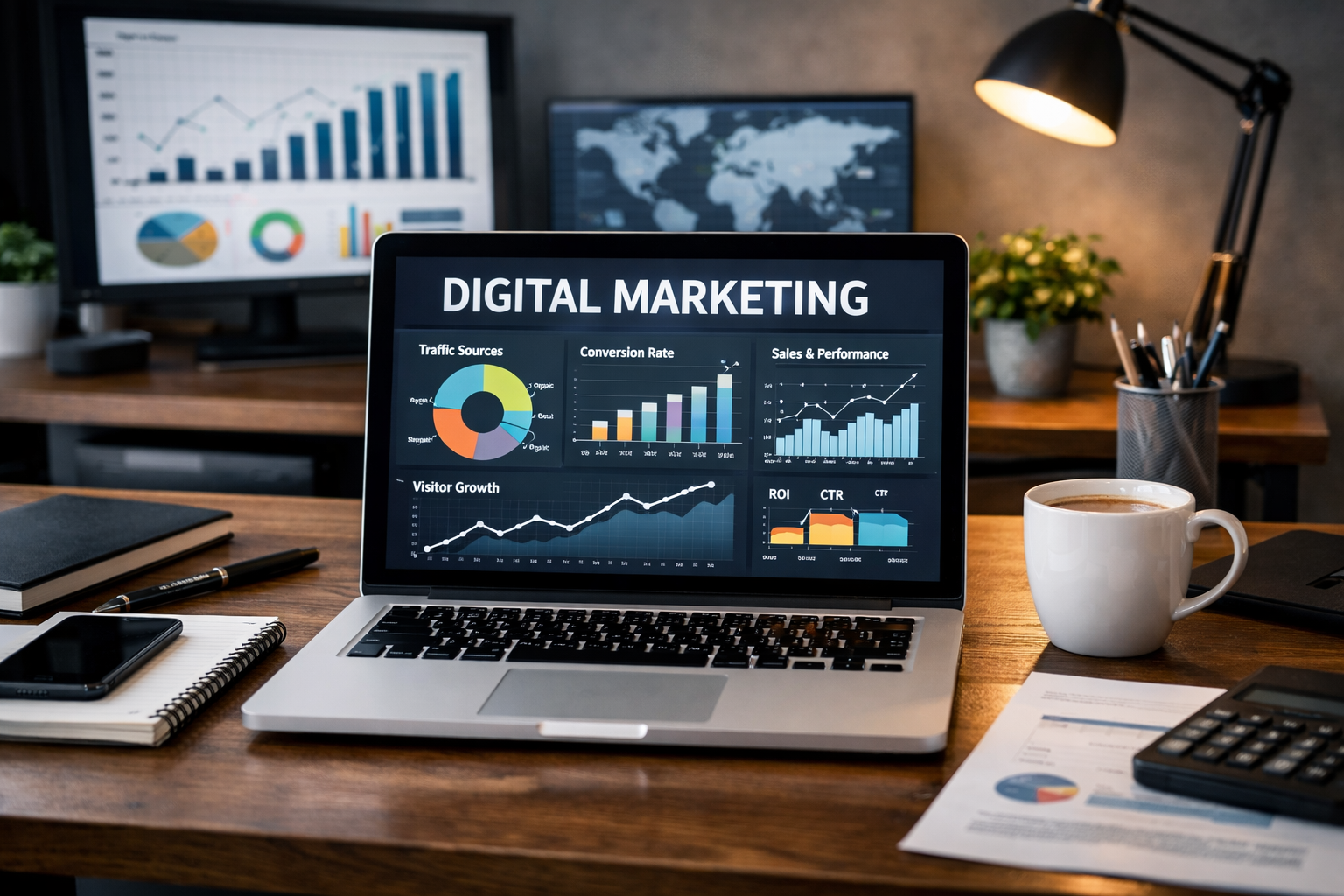
The biggest difference between traditional marketing and digital marketing is data and tracking.
With a traditional billboard on a highway, you can never truly know how many people looked at it. Digital marketing changes that completely. It allows you to track exactly how many people saw your ad, clicked on your link, and made a purchase. This makes it highly efficient for any business.
5 Core Pillars of Digital Marketing
Digital marketing is a broad term that covers several different strategies. To build a successful online brand, you should understand these five main pillars:
1. Search Engine Optimization (SEO)
Whenever you have a question, you likely turn to Google. SEO is the art of setting up your website so that Google shows your pages at the very top of the search results. When your site ranks high naturally without paying for ads, you get free, high-quality traffic every day.
2. Social Media Marketing (SMM)
This is all about building a community where your customers hang out. Platforms like Instagram, Facebook, and LinkedIn allow brands to talk directly with their audience. It is about creating helpful videos, sharing images, and building real connections with followers.
3. Content Marketing
Instead of constantly asking people to buy products, content marketing focuses on giving away helpful information for free. This can be done through informative blog posts or educational guides. When you solve a user’s problem first, they naturally grow to trust your brand.
4. Pay-Per-Click Advertising (PPC)
If you need immediate website visitors and cannot wait for SEO to grow naturally, you can use paid ads. Platforms like Google Ads let you place your website at the top of the page instantly. The best part is that you only pay money when a user actually clicks on your advertisement.
5. Email Marketing
When a user visits your website and enjoys your content, they might subscribe to your email newsletter. Sending regular updates, helpful tips, or special discounts directly to their inbox keeps your brand fresh in their mind. It remains one of the highest-converting tools in the industry.
Real-World Examples of Digital Marketing
To understand how this works in daily life, let us look at two simple everyday examples:
- Example A: A local bakery creates an Instagram account. They post short video reels showing how they bake fresh cakes. People in the city see these reels, love the presentation, and order cakes online. This is successful Social Media Marketing.
- Example B: You want to buy a new smartphone. You type “best smartphones under 20000” on Google. The first three websites that appear on your screen are there because of excellent Search Engine Optimization (SEO).
Why Modern Businesses Need Online Marketing in 2026
Digital marketing is incredibly efficient because it solves the biggest problem in advertising: wasting money on the wrong audience.
- Exact Targeting: If you sell running shoes, traditional TV ads show your product to everyone. Digital ads allow you to target only people who are actively searching for running shoes online.
- Budget Flexibility: You do not need thousands of dollars to start. A small business can launch an online campaign with just a few dollars a day and grow slowly.
- Global Opportunities: A person sitting in a small room can build a website and sell a digital product to a customer on the other side of the world overnight.
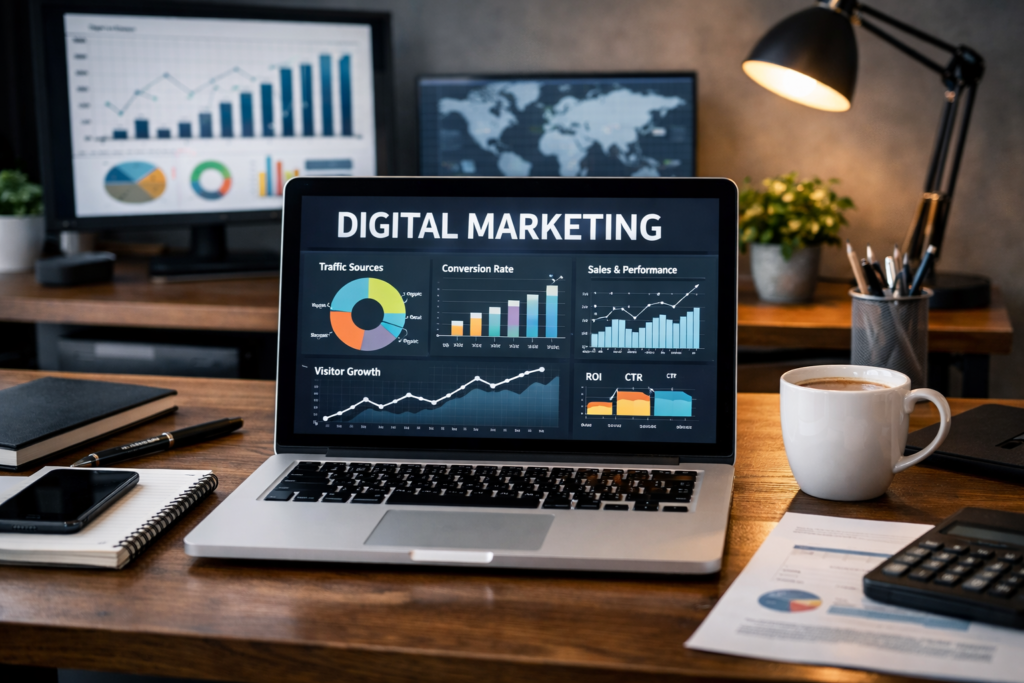
- Instant Results and Tracking: With traditional ads like newspapers, you have to wait weeks to see if people like your ad. But with digital marketing, you can see how many people are looking at your website in real-time. You can change your plan instantly if it is not working.
- Building Trust Through Content: Modern customers do not like forced sales. Digital marketing helps you talk to your audience through helpful videos or blog posts. When you give free knowledge first, people naturally trust your brand and buy your products later.
- Competing with Big Brands: In the offline world, small shops cannot fight with big companies because of low budgets. But on the internet, a clean website with good information can easily rank above a billion-dollar company on Google. It creates a fair playground for everyone.
- 24/7 Non-Stop Marketing: An offline shop or office has strict opening and closing hours. But your website and digital ads work for you 24 hours a day, 7 days a week. Even when you are sleeping peacefully at night, potential customers can read your blog and discover your brand
- Higher Conversion Rates: When people see an ad on TV, they cannot click it to buy instantly. But with online marketing, a customer is just one click away from purchasing. They see your post, click the link, and buy the product immediately. This makes selling much faster.
- The Power of Mobile Users: Almost every single person carries a smartphone in their pocket today. Digital marketing allows you to reach people directly on their phones through WhatsApp, Instagram, or Google. You are literally inside your customer’s pocket all the time.
- Easy Sharing and Viral Growth: If someone loves a traditional newspaper ad, they cannot easily share it with 100 friends. But on the internet, if users like your helpful blog post or video, they can share it with hundreds of people in just one second. This can make your brand go viral for free.
The Future of Digital Marketing
As we look at the year 2026, the digital space is evolving faster than ever before. Artificial Intelligence (AI) tools are helping creators write better and personalize ads for users.
Voice search is also growing because more people are using devices like Alexa and Google Assistant to find information. Therefore, businesses must adapt to these new trends to stay ahead of their competition.
Conclusion
At the end of the day, digital marketing is about connecting with people in the right place and at the right time. As the internet continues to grow, learning how to present a brand online is no longer optional—it is essential for long-term success.
Which part of digital marketing are you most excited to learn about first? Let us know in the comments below!